
Garden design
The best garden is one you want to spend time in. It gives you somewhere to sit, space to move and a view you enjoy from the house. DWE Landscapes & Design helps bring those pieces together, planning practical outdoor spaces for homes across Lancashire, Yorkshire and Greater Manchester from our base in Whalley.
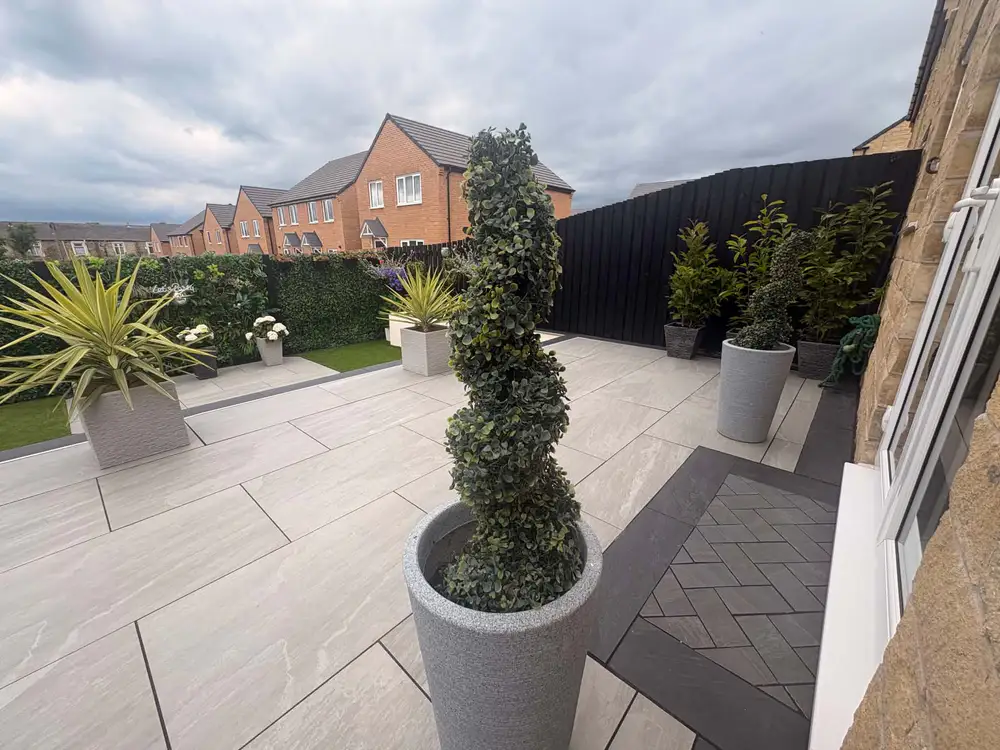
Start with how you want to use it
Before choosing paving or a fence colour, think about an ordinary day outside. You might want room for a family meal, a quiet seat away from the back door, easier access to the shed or a lawn that still leaves space for planting. Tell us what already works and what makes the current layout frustrating. Those details give the design a useful starting point.
We can discuss a whole-garden layout or focus on one area. Existing trees, established borders and sound hard landscaping may be worth keeping. A considered plan makes room for those features instead of assuming that everything has to go.
It also helps to think beyond summer. The outlook from a kitchen window, a usable route on a wet morning and somewhere to store everyday garden items all contribute to a space that works throughout the year. Good decisions often come from these ordinary details.
Make the layout work before choosing the finish
Patio size, routes through the garden and the relationship between different levels all affect daily use. A generous seating area needs space to pull chairs back; a path needs to lead somewhere useful. We consider these practical relationships alongside views from the house, privacy and how much upkeep you want to take on.
Material choices follow the layout. Porcelain, textured paving, timber, stone and planting each bring a different character. Keeping the palette focused can make a smaller garden feel more coherent, while changes in texture help define separate areas without filling the space with barriers.
Bring the idea within reach
An early conversation about budget helps identify priorities. It may make sense to invest first in the main patio and access, then complete planting or a secondary seating area later. If you are considering phases, say so at the start: the sequence can influence preparation, access and where finished materials meet.
Share a few photographs, approximate dimensions and examples of gardens you like. We will discuss the site, the work you want included and the next steps towards a clear quote. Any specialist input, permissions or additional design documentation needed for your particular proposal should be agreed before the work proceeds.
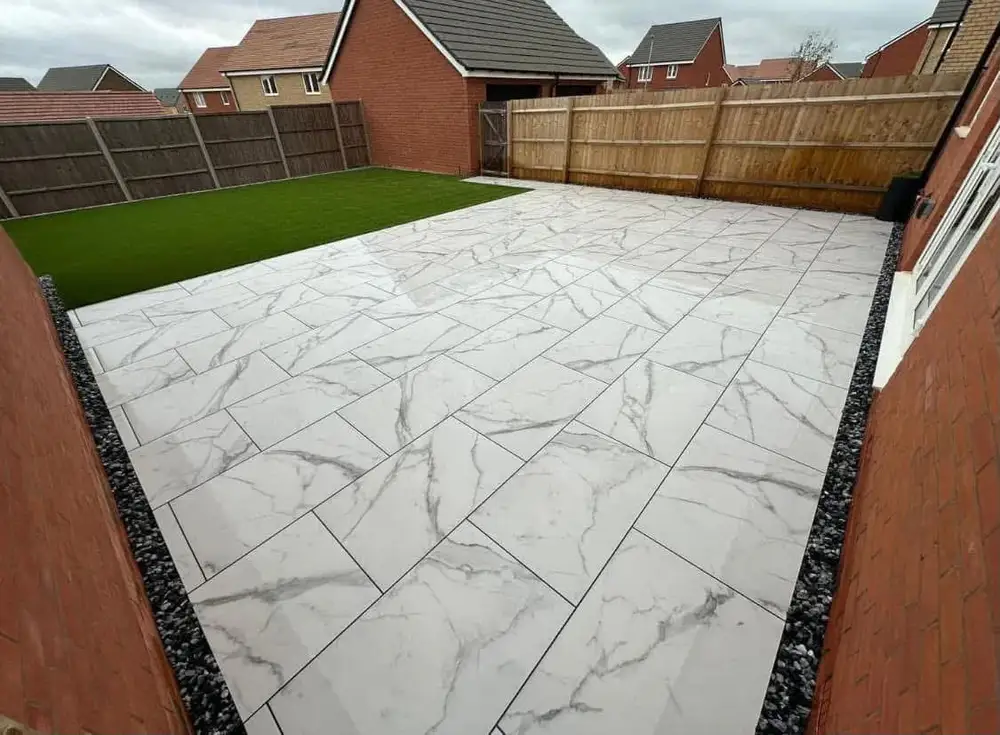
See the details in our work.
Selected examples from the DWE portfolio. Every proposal is considered for the individual site.
A few useful answers.
Do I need to know exactly what I want?
No. A list of what you like and dislike about the existing garden is enough to start a conversation. Photos of styles you enjoy can also help us understand the direction.
Can the design keep existing features?
Yes, keeping suitable features can be part of the brief. Tell us about trees, borders, paving or garden structures you would like to retain so their condition and place in the new layout can be considered.
Does the quote include drawings?
The design information included depends on the project. If you need particular plans or drawings, mention them when you enquire so the scope and any associated cost can be agreed.
Bring the whole space together.
Garden transformations
When a garden no longer fits the way you live, changing a single feature may only solve part of the problem.
Porcelain patios
A porcelain patio can give your garden a crisp, contemporary centrepiece.
Turfing & planting
A fresh lawn and well-placed planting can change how a garden feels.
Let’s talk garden design.
A whole new garden or one thoughtful change. Tell us what you have in mind and let’s make a plan.