
Paving, paths & flagging
Good paving makes a garden easier to use. It gives you a comfortable route to the gate, a defined approach to the front door or a place to pause between planted areas. DWE Landscapes & Design installs paths, patios and flagging with attention to how each surface fits into the wider outdoor space.
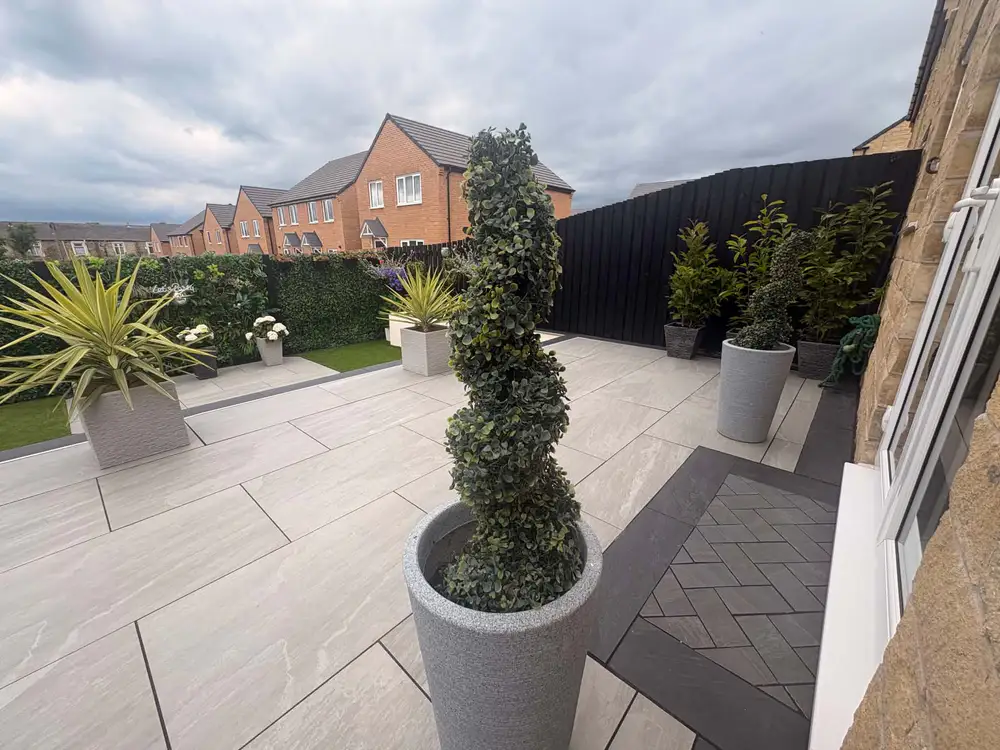
Follow the way you move
A garden path should connect the places you actually use. That could be the kitchen door and bins, a side entrance and shed, or a terrace and a secluded seat. Planning around those journeys helps avoid narrow corners, awkward detours and worn tracks across the lawn.
We discuss width, direction and where a path needs to meet other surfaces. If you regularly move a wheelbarrow, bicycle or garden furniture along the route, mention it early. Where easier access is a priority, the particular requirements should shape the proposal instead of being added after the paving has been chosen.
Not every route needs the same visual emphasis. The path to the front entrance might be a defining feature, while access to a storage area can sit more quietly within the layout. Giving each route an appropriate role helps keep the garden legible without making it feel dominated by paving.
Give the paving the right character
Straight lines and a restrained palette can sit comfortably alongside a modern house. A softer route through planting may suit a garden with a more informal feel. The choice of flags, laying pattern and border changes the character of the route, even when the overall dimensions stay the same.
Connecting a new section to existing paving deserves careful thought. An exact match may not be available, and weathered materials can differ from new ones. A deliberate change of tone, texture or direction can create a clear transition rather than an almost-match that feels accidental.
Look beyond the surface
Preparation and site conditions influence how a paved area performs. Levels, water run-off, roots and the condition of an existing surface all need attention before the finish is installed. We assess the proposed work and discuss what needs to be included, from removing old flags to forming edges and making good adjoining areas.
For a replacement path, photographs of both ends and any problem areas are useful when you enquire. For a new route, explain what it needs to connect and how the garden is used. We can discuss a standalone paving job or combine paths with a patio, lawn, planting or boundary improvements in one quote.
See the details in our work.
Selected examples from the DWE portfolio. Every proposal is considered for the individual site.
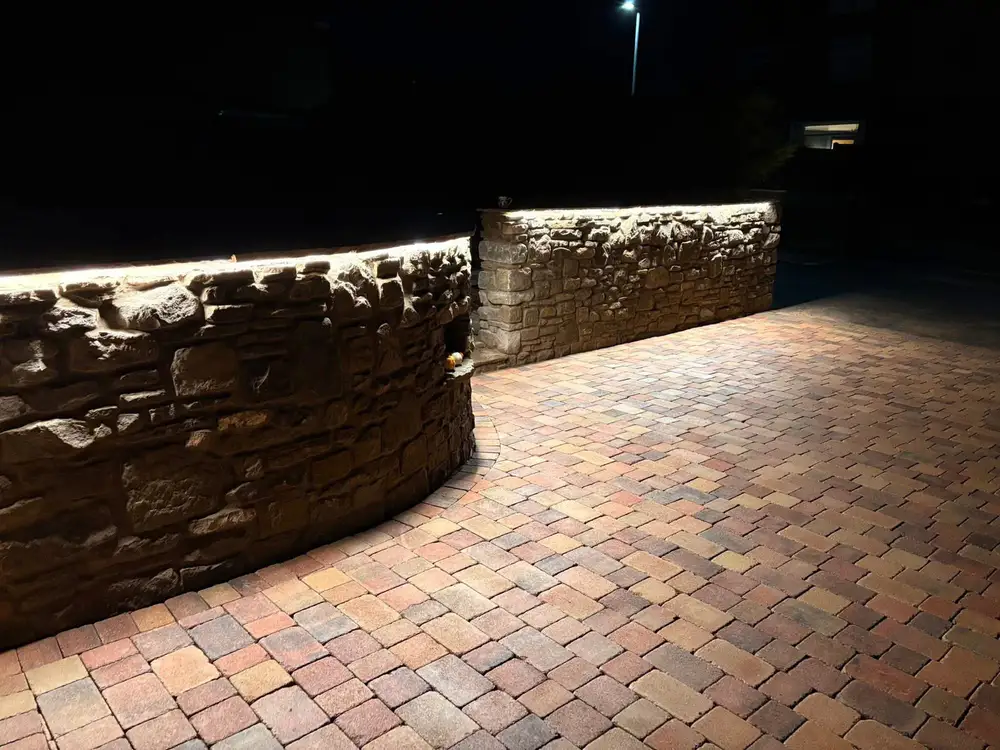
A few useful answers.
Can you replace only part of an existing path?
That may be possible, depending on the condition of the surrounding paving and the proposed connection. We would also discuss whether a matching material is available or a contrasting section would give a better result.
Can paving be included with other landscaping?
Yes. Paths and flagging can be planned alongside a patio, lawn, fencing or planting, which helps the surfaces and edges work together across the garden.
What should I send for a paving enquiry?
Send photographs, approximate dimensions and a short description of how the area will be used. Mention access restrictions and any existing puddling, loose flags or uneven sections.
Bring the whole space together.
Porcelain patios
A porcelain patio can give your garden a crisp, contemporary centrepiece.
Driveways & block paving
Your driveway is both an everyday working surface and the first impression of your home.
Stonework & garden building
Walls and stone details give a garden definition.
Let’s talk paving, paths & flagging.
A whole new garden or one thoughtful change. Tell us what you have in mind and let’s make a plan.